Contents

The significance of flamenco in Madrid

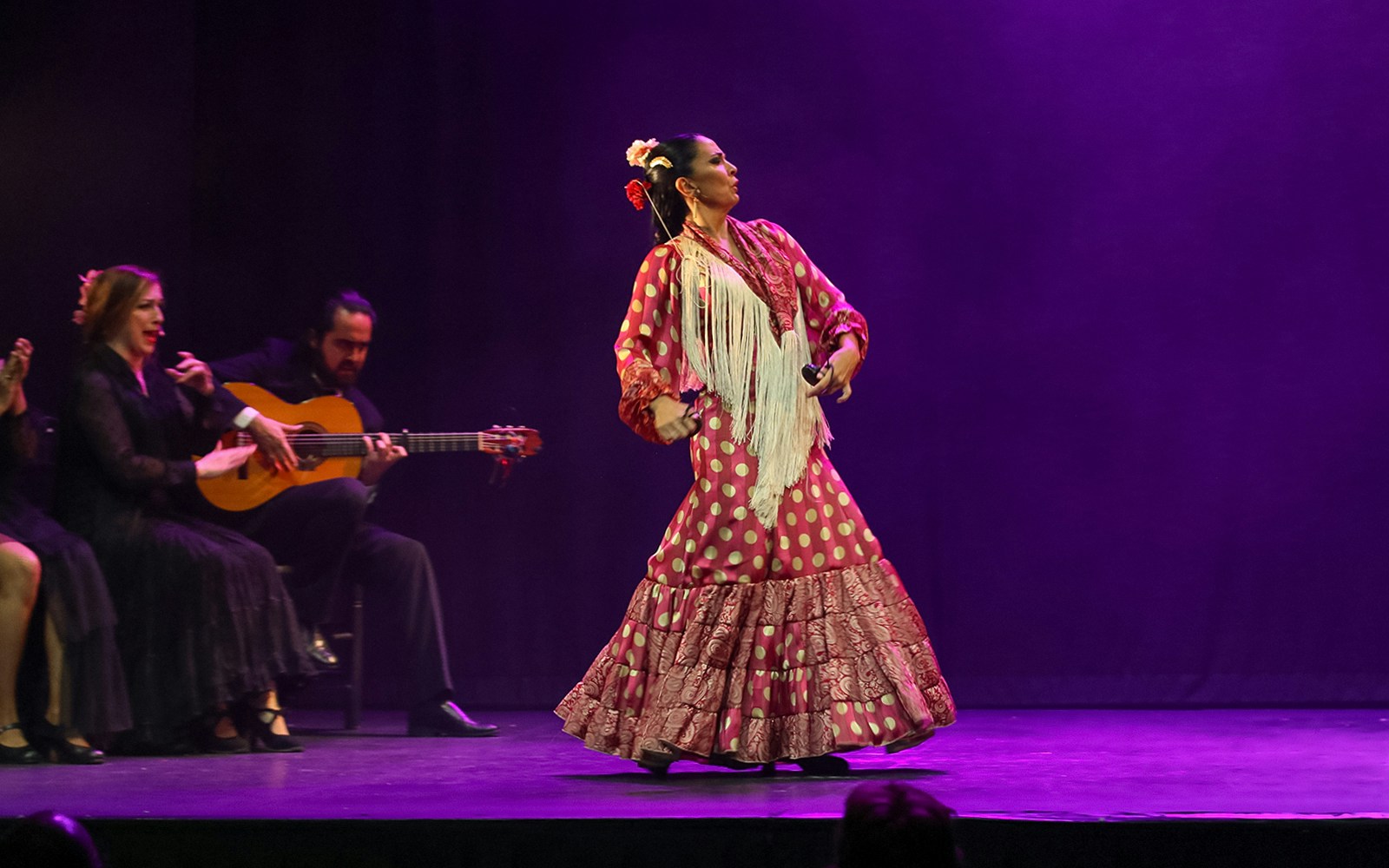
Madrid doesn’t just host flamenco, it shapes it. From smoky 19th-century cafés cantantes to today’s electric tablaos and late-night rehearsals at Amor de Dios, the city has been the place where legends are made, styles collide, and flamenco evolves with every generation.

Flamenco in Madrid’s art scene

Theater & performance spaces

Spaces like Teatro de la Villa, Fernán Gómez Cultural Centre, Teatros del Canal, and even historic palace gardens host flamenco premieres, contemporary reinterpretations, and fusion projects blending jazz, world music, and classical elements.

Flamenco schools & training hubs

Madrid is home to renowned academies like Amor de Dios, where generations of dancers, including Sara Baras and Joaquín Cortés, have trained. The city attracts aspiring artists worldwide for its rigorous training and creative opportunities.

Festivals & citywide celebrations

The annual Suma Flamenca Festival transforms Madrid into a flamenco playground with top performers, premieres, and cross‑disciplinary collaborations. Smaller events like Flamenco pa Tós support social causes while celebrating the art form.

Cultural significance & values of flamenco in Madrid

Emotional truth (Duende)

Madrid’s flamenco artists lean into emotional honesty, treating every performance as a release of pent‑up feeling. Singers push their voices to expressive extremes, dancers let the moment guide their footwork, and guitarists weave phrases that feel almost conversational.

  • Raw, gut‑driven vocal delivery
  • Improvised choreography shaped by the artist’s mood
  • Guitar falsetas that shift intensity in real time

Community & identity

Flamenco in Madrid thrives because it’s rooted in real community life, including neighbourhood peñas, multi‑generational families of performers, and informal gatherings where artistic values are passed down naturally. This social ecosystem keeps the art form grounded, collaborative, and constantly replenished with new voices.

  • Iconic peñas like the historic Casa Patas are shaping local culture
  • Family traditions keep cante and baile alive at home
  • strong mentorship culture bridging veterans and rising talents

Freedom to innovate

Madrid champions creativity, allowing artists to push boundaries without judgment. The city’s tablaos, theatres, and studios act as testing grounds for hybrid styles, bold staging choices, and new musical approaches.

  • Fusion works blending flamenco with Latin, jazz, or electronic influences
  • Experimental staging and storytelling techniques across major theatres
  • Innovative guitar styles emerging from Caño Roto’s musical lineage

Cultural crossroads

As Spain’s cultural capital, Madrid attracts artists from every region and from around the world. This constant flow of people and ideas gives the city’s flamenco a distinctive hybridity, mixing Andalusian roots with global influences.

  • Immigrant communities contributing fresh rhythmic and dance perspectives
  • International performers are training in Madrid’s top conservatories and academies
  • Hybrid shows that blends traditions and modern elements, becoming widely embraced

Influence of flamenco on other art forms

  • Music: Madrid’s famed guitar-making houses, from Ramírez to Conde, shaped the deep, resonant sound now associated with flamenco worldwide, influencing how performers play on stage and in studios. The city’s concert halls and creative hubs also nurtured a vibrant jazz-flamenco fusion movement, giving artists room to experiment and push the genre into new sonic territories.
  • Dance: Contemporary dance companies across Madrid often weave flamenco footwork into their choreographies, blending tradition with modern forms to create bold, hybrid styles. Institutions like the Ballet Nacional de España frequently collaborate with Madrid-based artists, ensuring that flamenco’s rhythmic language continues to evolve within mainstream dance.
  • Theatre & cinema: Madrid has long been a backdrop for flamenco storytelling, with directors like Carlos Saura capturing iconic works that shaped how the world sees the art form. The city’s alternative theatre circuit also embraced flamenco-theatre hybrids, premiering productions that mix narrative, movement, and music in innovative, emotionally charged ways.
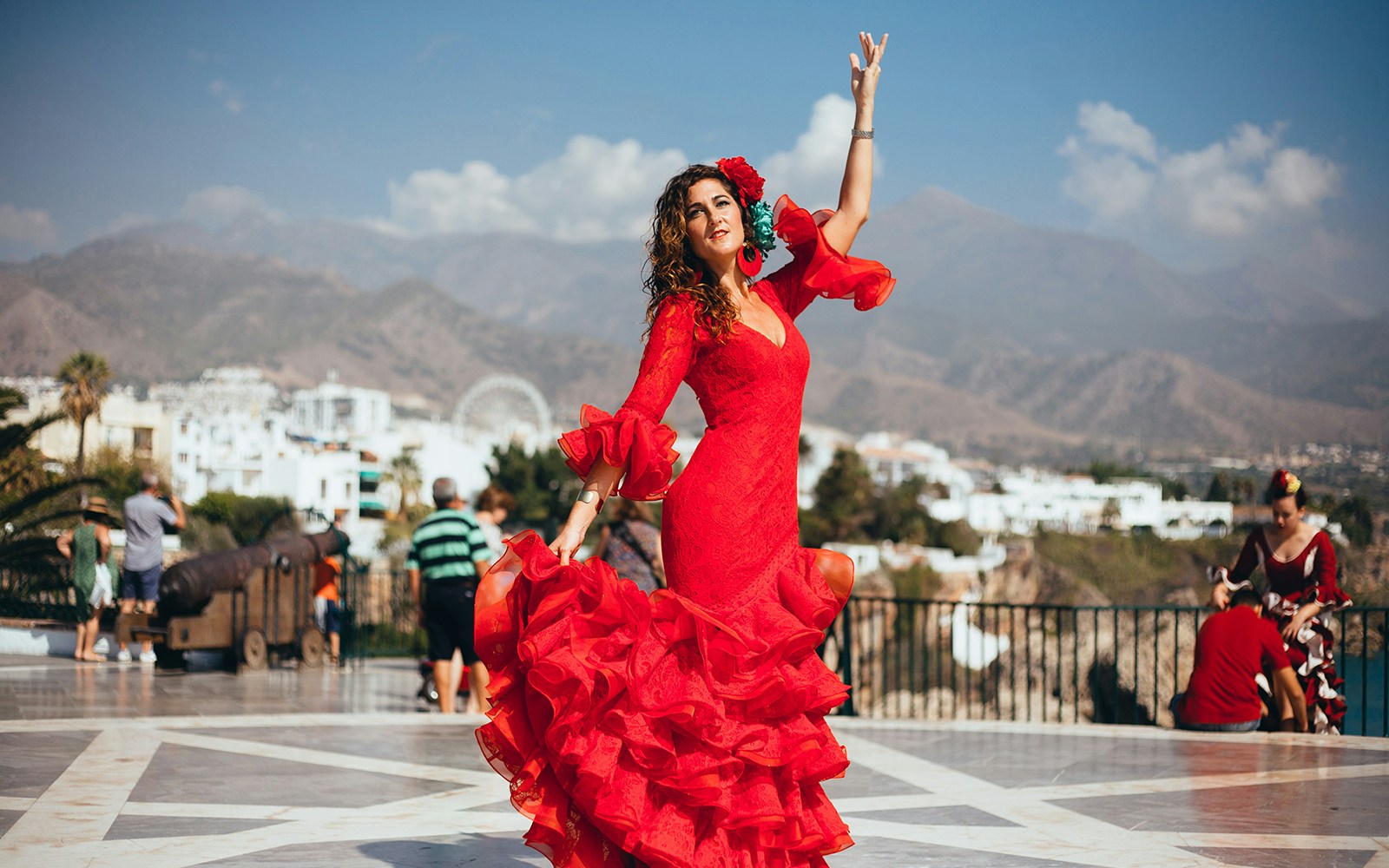
  • Fashion: Flamenco’s influence runs through Madrid’s design scene, with its dramatic silhouettes and textures appearing on runways during Madrid Fashion Week. In neighbourhoods like Lavapiés and Malasaña, skilled costume ateliers craft pieces for major tablaos, blending craftsmanship with contemporary style to dress dancers in looks that feel both traditional and fresh.

Fun facts on flamenco in Madrid

  • The first press mention (1847): Flamenco’s earliest documented appearance in Madrid dates to 1847, highlighting performances by Lázaro Quintana and Dolores la Gitanilla. This moment marked the city’s first recorded embrace of the art form, placing Madrid on the historical flamenco map decades before tablaos became widespread.
  • The Caño Roto guitar sound: Carabanchel’s Caño Roto neighbourhood pioneered a bold, percussive guitar style in the mid‑20th century. Local musicians developed innovative phrasing and rhythmic techniques that shaped modern flamenco guitar and continue to influence players across Spain today.
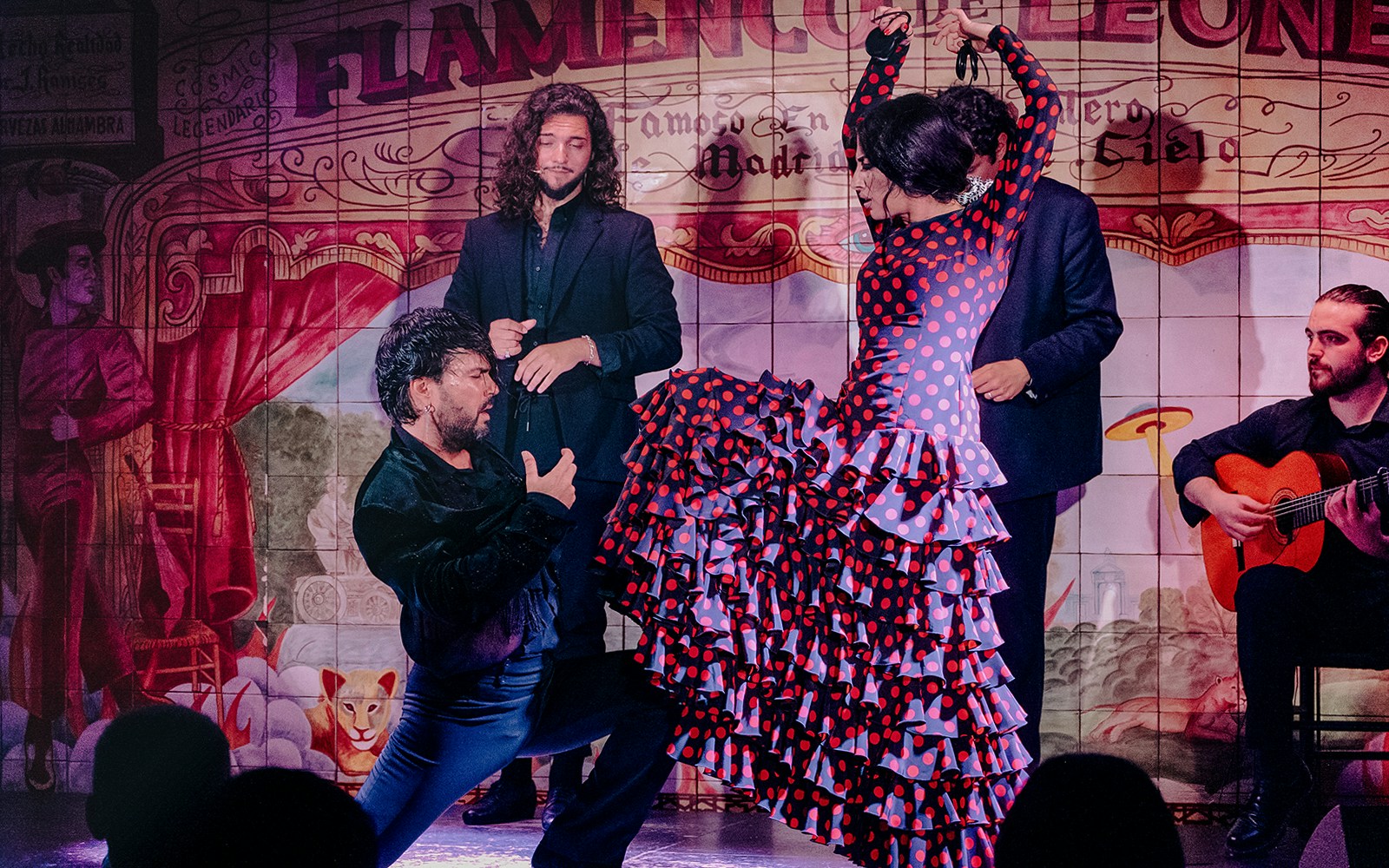
  • Villa Rosa’s star-studded legacy: Tablao Villa Rosa, famous for its hand‑painted tiles and décor by bullfighters and artists, became a hotspot for legends like Lola Flores. Its bohemian atmosphere turned it into one of Madrid’s most storied flamenco meeting points.
  • Amor de Dios, the training ground: The Amor de Dios dance studio is revered as the “Harvard of flamenco,” with stars like Joaquín Cortés and Sara Baras sharpening their craft within its walls. Its open‑door policy fostered a melting pot of global talent and traditional expertise.
  • Paco de Lucía’s creative home base: Although from Algeciras, Paco de Lucía spent crucial years performing, rehearsing, and recording in Madrid. Several of his genre‑defining albums were shaped in the city’s studios, solidifying Madrid’s role in his artistic evolution.
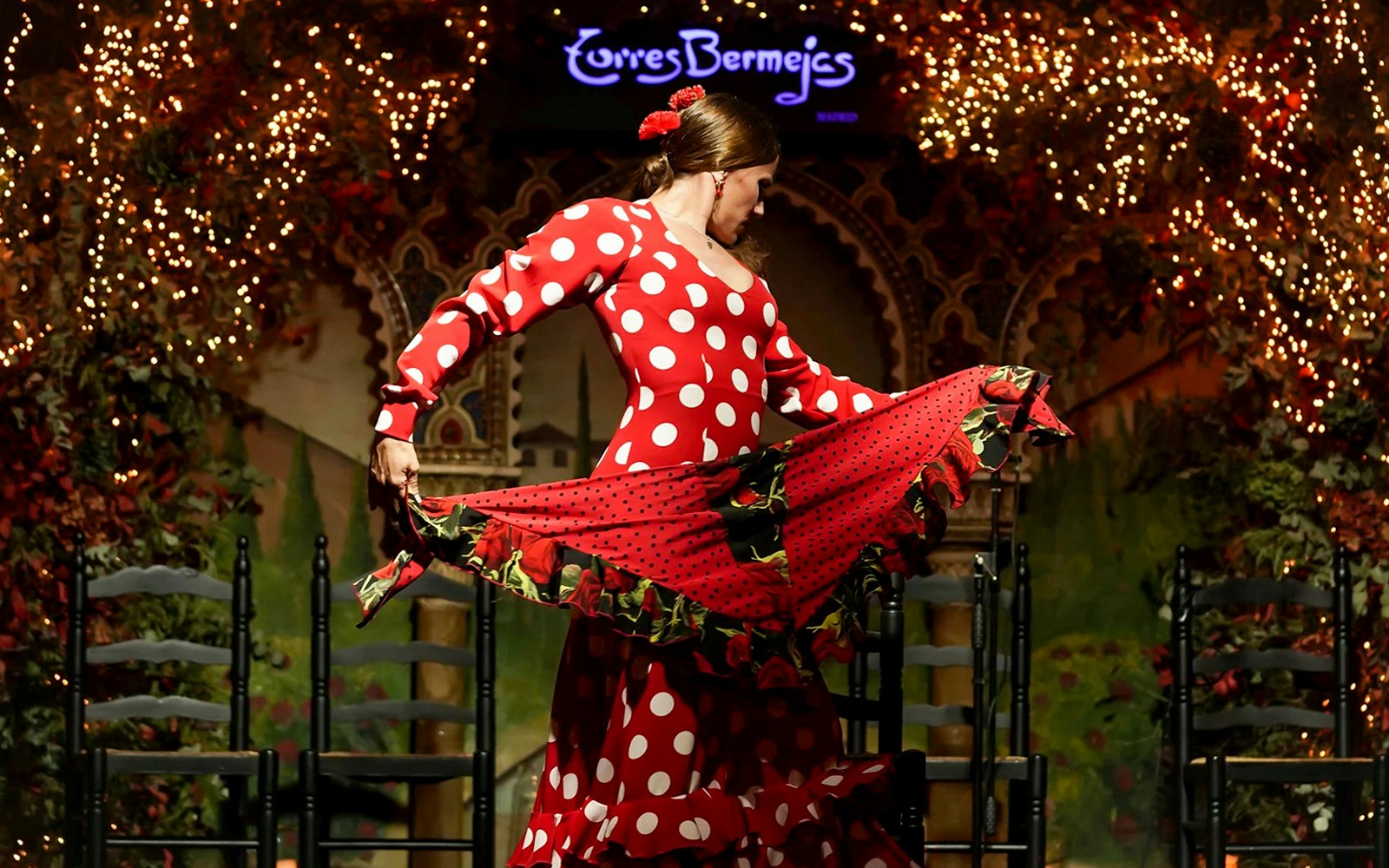
  • Torres Bermejas’ Alhambra‑inspired design: The iconic Torres Bermejas tablao features an interior modelled after the Alhambra’s Hall of the Kings, creating a dramatic Moorish‑inspired backdrop that elevates every performance with a sense of history and grandeur.
  • Secret 1970s jam sessions: In the 1970s, Madrid tablaos quietly hosted late‑night jam sessions where young Camarón de la Isla and other rising stars experimented fearlessly. These underground gatherings birthed collaborations that later became flamenco milestones.
  • Royal gardens turned stages: Flamenco Under the Stars: Some editions of Suma Flamenca transformed spaces like the Sabatini Gardens and parts of El Retiro into open-air flamenco stages. These twilight performances blended royal architecture, nature, and live artistry for a uniquely magical experience.
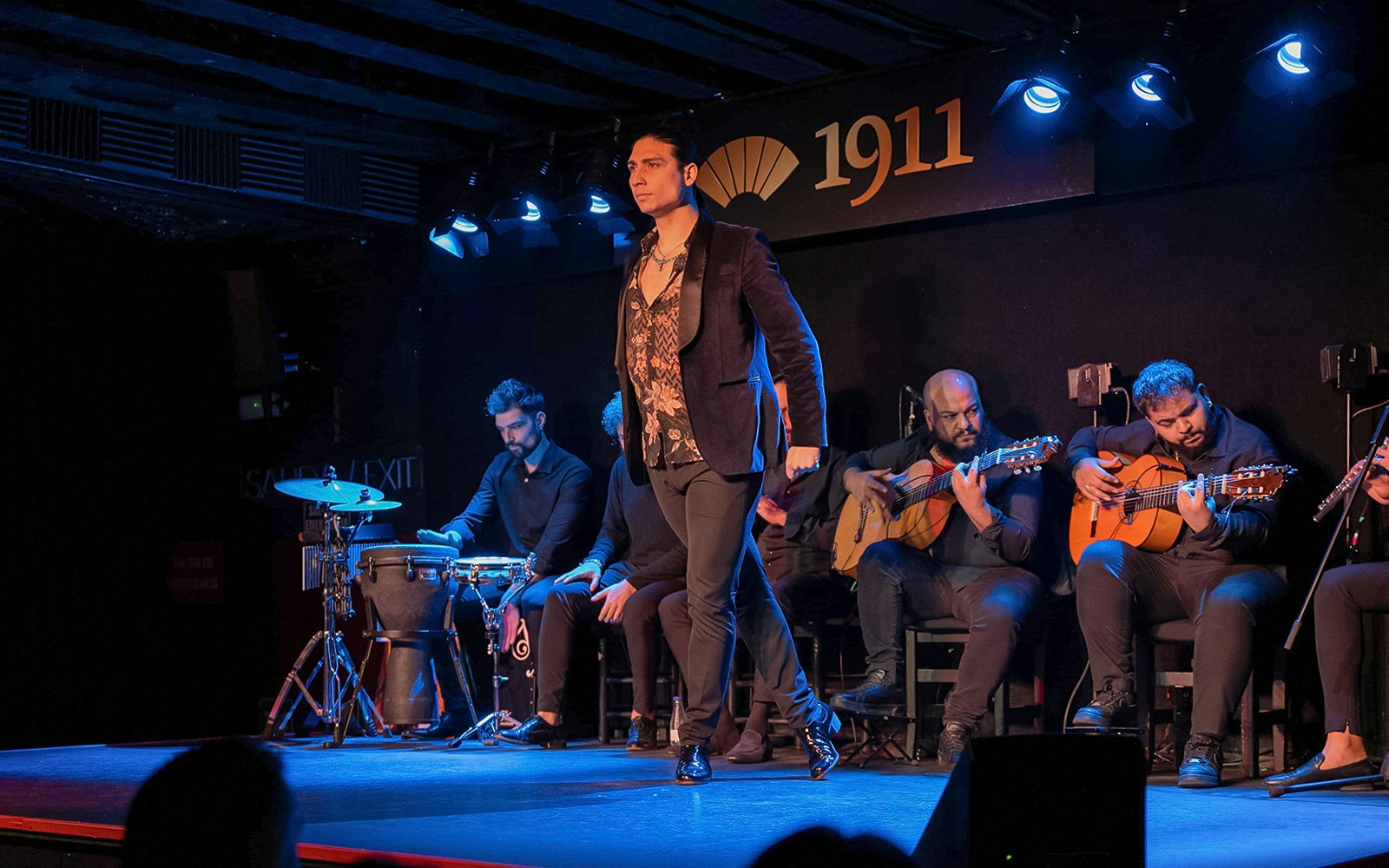
  • Madrid’s tablao capital status: With one of the highest concentrations of tablaos in Spain, Madrid offers an unmatched variety, from historic staples like Cardamomo to modern venues like Tablao 1911. The city’s density of stages makes flamenco accessible every night of the week.
  • Madrid on the global screen: International film crews often turn to Madrid’s tablaos and studios to capture authentic flamenco. Local artists have contributed to major film soundtracks, documentaries, and iconic dance scenes, influencing how global audiences perceive the art form.